
Libertex sign-in
Log in to your Libertex account
Sign in to your Libertex account to manage open trades, your balance, and withdrawals — or open a new account in minutes if you're just starting out.
Trusted
- downloads
- 15M+
- reviews
- 25K+
- years
- 26+
- countries
- 120+
across iOS and Android
App Store + Google Play
in global markets
served worldwide
Industry recognition

Most Trusted Broker
2024 · European CEO Awards

Best Global Broker
2025 · UF Awards

Best Online Trading Platform
2025 · Fintech Breakthrough

CFD Broker of the Year
2024 · Pan Finance
One account, every surface
Log in on web, iOS, and Android
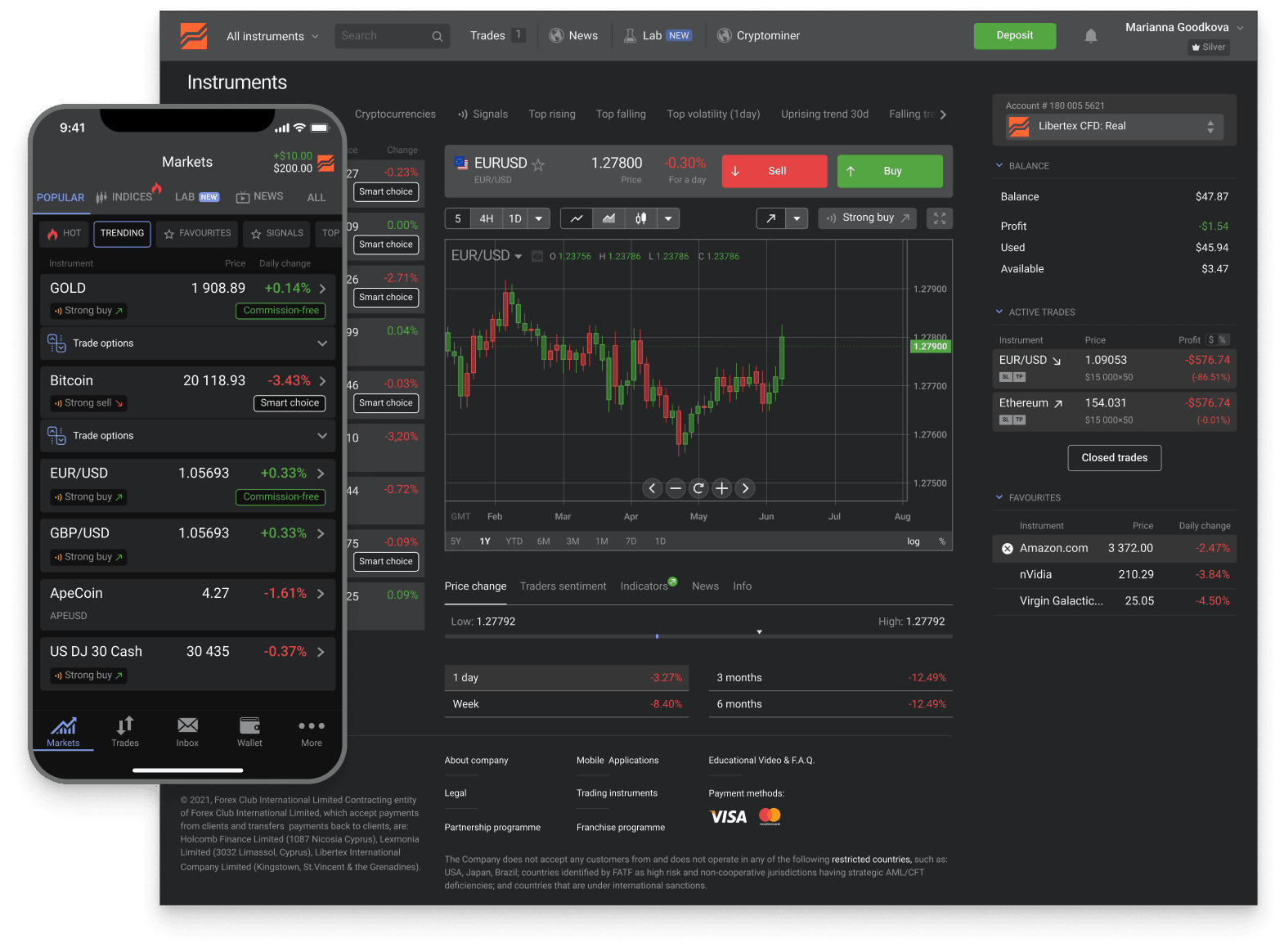
Your Libertex credentials are the same across the web terminal and mobile app. Open positions, watchlists, and order history sync in real time across devices.
Web terminal
Sign in at libertex.org from any modern browser — Chrome, Safari, Firefox, Edge. No download required.
iOS and Android apps
Download the official app from the App Store or Google Play. First sign-in uses your email and password; afterwards, biometric unlock (Face ID, Touch ID, fingerprint) is supported on capable devices.
Stay signed in
The web "Remember me" option keeps browser sessions active for roughly 30 days. Mobile apps stay signed in until you actively log out or change credentials.
Avoid phishing
How to spot the real Libertex login page
Financial-services phishing is common. When you reach the login page, check four things — none of them require special tools.
HTTPS and a valid lock icon
The genuine login page is served over HTTPS. A modern browser shows a lock icon in the address bar — click it to inspect the certificate. No lock, or a certificate warning, means stop.
The official domain
The genuine login lives at libertex.org — confirm the spelling character-for-character before entering credentials. Phishing pages use look-alike domains with extra dots, hyphens, or Cyrillic substitutes that read the same but resolve elsewhere.
Never asks for full password via email
Libertex will never ask you to send your password, your full card number, or your 2FA backup codes through email, SMS, or chat. Any such request is a phishing attempt. Report it and ignore it.
No account yet?
Open a Libertex account
Libertex is an international CFD broker: forex, crypto, stocks, indices, commodities, ETFs, and bonds in one account. Register in a few minutes, practise on a demo, and fund your account when you're ready to trade live.
Quick fixes
Already have an account but can't sign in?
Three patterns cover most failed sign-ins. Each has a 30-second fix before you need to contact support.
- Forgot your password
- Use the "Forgot password" link on the official login page. Enter the email address you registered with — the broker sends a single-use reset link that typically expires within 30–60 minutes.
- Two-factor code rejected
- TOTP codes from authenticator apps expire every 30 seconds. Sync your device clock, wait for a fresh code, and type it manually. If you lost your 2FA device, use the backup codes issued at setup.
- Account locked after failed attempts
- Repeated wrong-password attempts trigger a temporary lockout to prevent brute-force attacks. Wait 15–30 minutes, then try again with a verified password. Persistent lockout requires support intervention.
FAQ
Login questions
Trading in financial instruments is a risky activity and can bring not only profits, but also losses. The amount of possible losses is limited by the amount of the deposit.